Google Ads vs Meta Ads for Dubai Real Estate | Orion Sirr
Journal · Atelier · Dubai
Google Ads vs Meta Ads for Dubai real estate
One platform reaches buyers who are already searching. The other reaches them before they start. For most Dubai projects, the real question isn't which one to choose, but how to make them work together.

Every developer and brokerage in Dubai eventually asks the same question: should the budget go to Google or to Meta? It is the right question asked the wrong way. The two platforms reach the same buyer at different moments, and real estate advertising in Dubai works best when each does the job it is built for.
This article explains what each platform does well, where each one wastes money, and how to measure both on the only number that matters to a sales team: qualified enquiries. If you are preparing a launch, read it alongside our off-plan launch playbook.
Searching vs scrolling buyers
A buyer on Google is looking for something. They type a community name, a developer, a type of property or a phrase like "off-plan apartments with payment plan". The intent is already there. Your job is to be the best answer.
A buyer on Instagram or Facebook is not looking for anything. They are scrolling. Your job is to interrupt them with something beautiful and relevant enough to make them stop, and then give them a reason to come back.
What Google does best
Google Search is where demand is captured. When it is set up well, it puts your project in front of people at the exact moment they are comparing options.
- Community and project searches. Buyers searching for a specific area, a project type or a developer.
- Your own brand. Protecting your project and developer name, so competitors and portals don't take those clicks.
- International intent. Buyers abroad searching for Dubai property in their own language and market.
Where Google wastes money is broad, vague keywords and traffic sent to a general homepage. Tight keyword lists, careful exclusions and a dedicated landing page per project make the difference between expensive clicks and real enquiries.
What Meta does best
Meta is where demand is created. Most buyers who eventually purchase in a new development were not searching for it when they first saw it. They saw a film, a view or a floor plan, and it stayed with them.
This is where content quality matters most. In a feed full of renders and phone videos, an editorial film or a calm, considered photograph stops the scroll. It's the same reason we treat real estate social media management in Dubai and paid campaigns as one system rather than two.
One caution: Meta's instant lead forms often bring a high volume of enquiries at a low cost, but many of them are weak. People tap through without much thought. Adding qualifying questions, or sending traffic to a proper landing page, usually brings fewer leads that are worth far more.
Why most projects need both
The strongest campaigns use the two platforms as one journey. Meta introduces the project to buyers who didn't know it existed. Some of them later search for it on Google, where your search campaign is waiting. And retargeting on both platforms brings back everyone who visited but didn't enquire, with a different angle each time: the view, the floor plan, the payment plan, the handover date.
Meta makes buyers want it. Google makes sure they find you when they do.
How to split the budget depends on the stage. Before a launch, more weight usually goes to Meta, to build an audience. Once a project is known and people are searching for it, Google often carries more of the load. The split should be reviewed every month, based on what each platform actually delivers.
Measure enquiries, not impressions
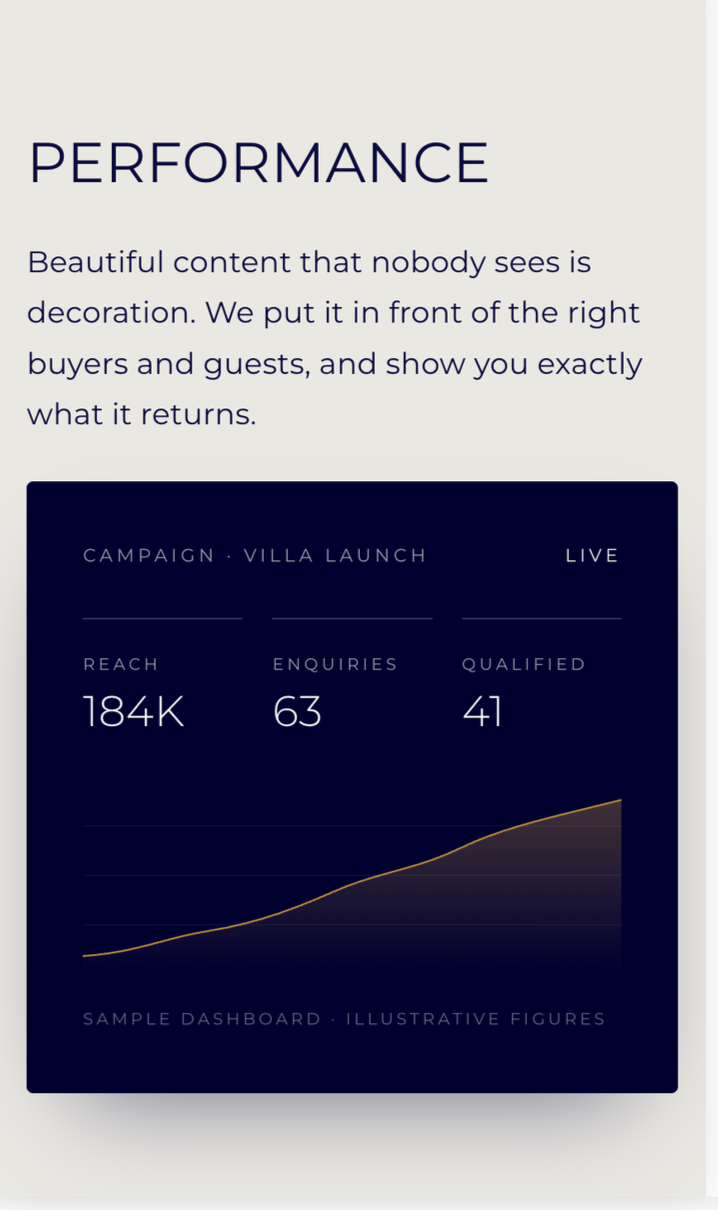
Reach, impressions and clicks look impressive in a report. They don't sell apartments. The numbers that matter are cost per enquiry, cost per qualified enquiry, and, closest to sales, how many enquiries turn into viewings and reservations.
That last part requires a feedback loop between marketing and sales. When the sales team marks which leads were serious, the campaigns can be tuned toward the audiences, keywords and creatives that bring those buyers. This is the core of real estate lead generation in Dubai done properly: the system improves every month because it learns from sales, not from clicks.
A note on compliance
Property advertising in Dubai generally requires a permit held by the broker or developer, and permit details are expected to appear in ads. Both platforms also have their own policies for housing and financial advertising. We build these into every campaign from the start; confirm current requirements with your compliance team before launch.
Use Meta to create demand with strong content, Google to capture it when buyers search, retargeting to connect the two, and measure everything on qualified enquiries. That is how we run campaigns in Atelier Dubai.
Questions
Is Google or Meta cheaper for real estate leads?
Meta often brings cheaper leads, while Google leads often show stronger intent. The useful comparison is cost per qualified enquiry, which usually narrows the gap.
Should we use Meta's instant lead forms?
They can work, but they tend to bring weaker leads. Adding qualifying questions or sending traffic to a dedicated landing page usually brings fewer, better enquiries.
How long before campaigns perform well?
Campaigns usually improve over the first weeks as they learn which audiences, keywords and creatives work. That is why we recommend running them as a monthly system rather than a one-off burst.

Stavros SismanidisFounder of Orion Sirr. Award-winning artist, formerly backstage at Milan, Paris and London Fashion Weeks. Based between Mykonos, Athens and Dubai.

Plan a campaign
Tell us about the property, the buyers you want and the timing. We reply within two working days.
Start an enquiry